
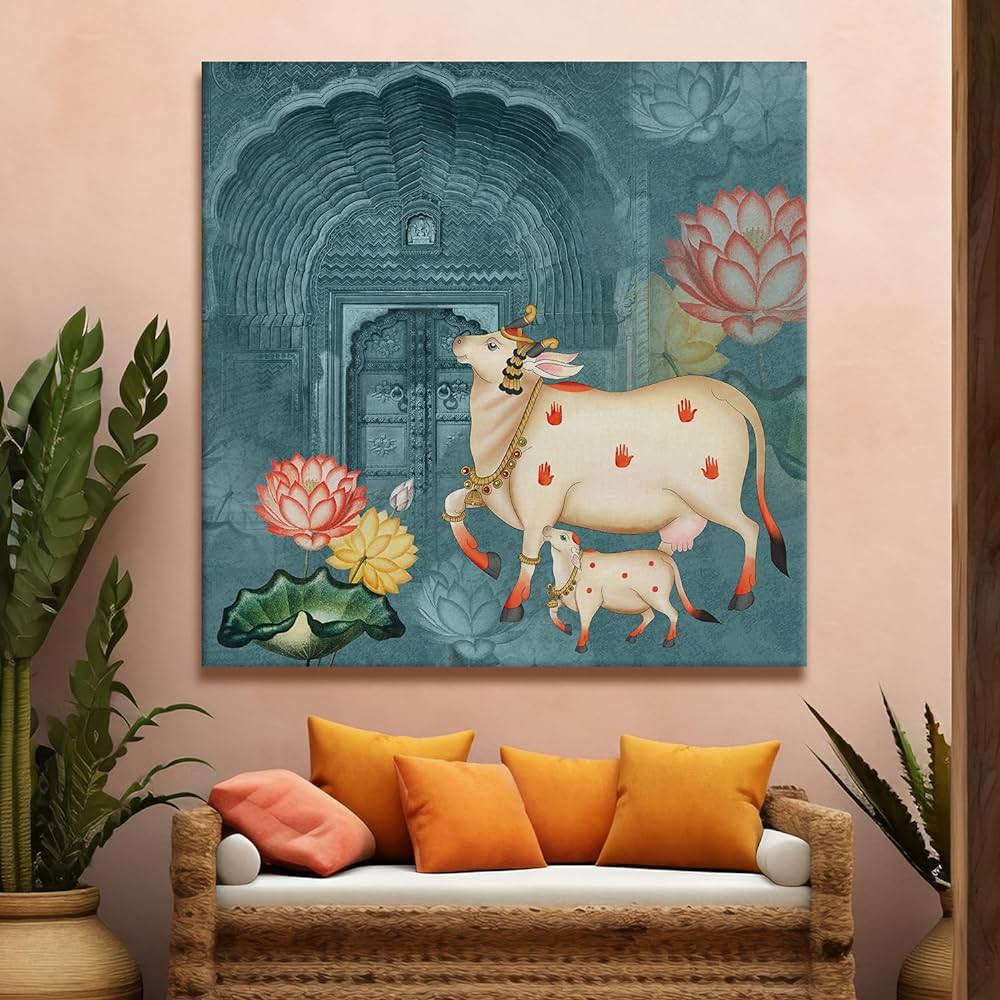
Pichwai painting, a traditional art form deeply rooted in the cultural tapestry of India, has captured the imagination of art enthusiasts worldwide. The term “Pichwai” translates to “at the back” in Rajasthani, referring to the large-scale intricate paintings that adorn the backs of deities in Hindu temples. This ancient art form, with its roots in the holy town of Nathdwara in Rajasthan, unfolds a vibrant narrative that intertwines spirituality, aesthetics, and the rich heritage of Indian artistry.
Origins of Pichwai Painting:
Pichwai painting has its origins in the 17th century when the followers of the Pushti Marg sect of Vaishnavism sought to visually enhance their devotion to Lord Krishna. The artists, often belonging to the renowned Chitrakar community, began creating these intricate artworks to embellish the backdrop of Nathdwara’s beloved deity, Shrinathji. The paintings served as a visual treat for devotees and a medium to narrate tales from Krishna’s life, his leelas (divine plays), and celebrations of festivals like Holi and Janmashtami.
Themes and Symbolism:
One of the distinguishing features of Pichwai paintings is their thematic diversity. From depicting the playful antics of Lord Krishna with the Gopis to portraying elaborate scenes of Raas Leela, each artwork is a visual feast of colors and intricate details. The artists employ a range of symbols and motifs, such as lotus flowers, peacocks, cows, and divine landscapes, to convey profound spiritual messages.
The Pichwai Process:
The creation of Pichwai paintings is a meticulous and time-consuming process, often requiring a collaborative effort of skilled artisans. The canvas for Pichwai is typically a large piece of cloth, and the artists use natural pigments derived from minerals, vegetables, and precious stones to achieve a vibrant color palette. The process involves intricate brushwork, delicate detailing, and an unwavering commitment to preserving the authenticity of this ancient art form.
Pichwai in Modern Times:
While Pichwai painting originated as a devotional art form, it has transcended its religious context and gained recognition as a unique genre of Indian art. Today, Pichwai paintings are not only sought after by collectors and art enthusiasts but also adorn the walls of contemporary homes and galleries around the world. The fusion of traditional techniques with modern interpretations has given rise to a dynamic and evolving art form that continues to captivate audiences.
Preserving Pichwai Heritage:
Despite its growing popularity, Pichwai painting faces the challenge of preserving its traditional techniques and passing them down through generations. In an era dominated by digital art and mass production, there is a pressing need to ensure that the rich heritage of Pichwai painting is not lost. Various initiatives, including art schools, workshops, and collaborations with contemporary artists, are playing a crucial role in safeguarding the authenticity and craftsmanship of Pichwai.
The Cultural Impact:
Pichwai paintings are not just artworks; they are a cultural legacy that bridges the gap between the past and the present. These vibrant depictions of Hindu mythology have become ambassadors of Indian culture, introducing people from diverse backgrounds to the richness and diversity of the country’s artistic heritage. The intricate details and symbolism in Pichwai paintings offer viewers a glimpse into the spiritual and cultural tapestry of India.
Beyond Borders:
In recent years, Pichwai painting has transcended geographical boundaries, gaining international acclaim for its unique aesthetic appeal. Galleries and art exhibitions worldwide have showcased the beauty of Pichwai, attracting a global audience eager to explore the intricacies of Indian art. The ability of Pichwai paintings to evoke a sense of spirituality and cultural richness has made them a popular choice for art connoisseurs seeking to connect with the deeper essence of human existence.
Pichwai as a Living Tradition:
The continued practice of Pichwai painting by skilled artisans and the integration of contemporary elements into this traditional art form highlight its resilience and adaptability. Pichwai is not merely a relic of the past but a living tradition that evolves with the times while staying true to its roots. This dynamic quality ensures that Pichwai remains relevant and captivating for generations to come.
Conclusion:
In the vast landscape of Indian art, Pichwai painting stands out as a testament to the timeless beauty of traditional craftsmanship. The intricate detailing, vibrant colors, and profound symbolism embedded in each Pichwai artwork offer a journey into the heart of Hindu mythology and Indian spirituality. As we marvel at the strokes of genius on these canvases, it becomes evident that Pichwai is not just a painting; it is a celebration of culture, heritage, and the enduring spirit of artistic expression.
